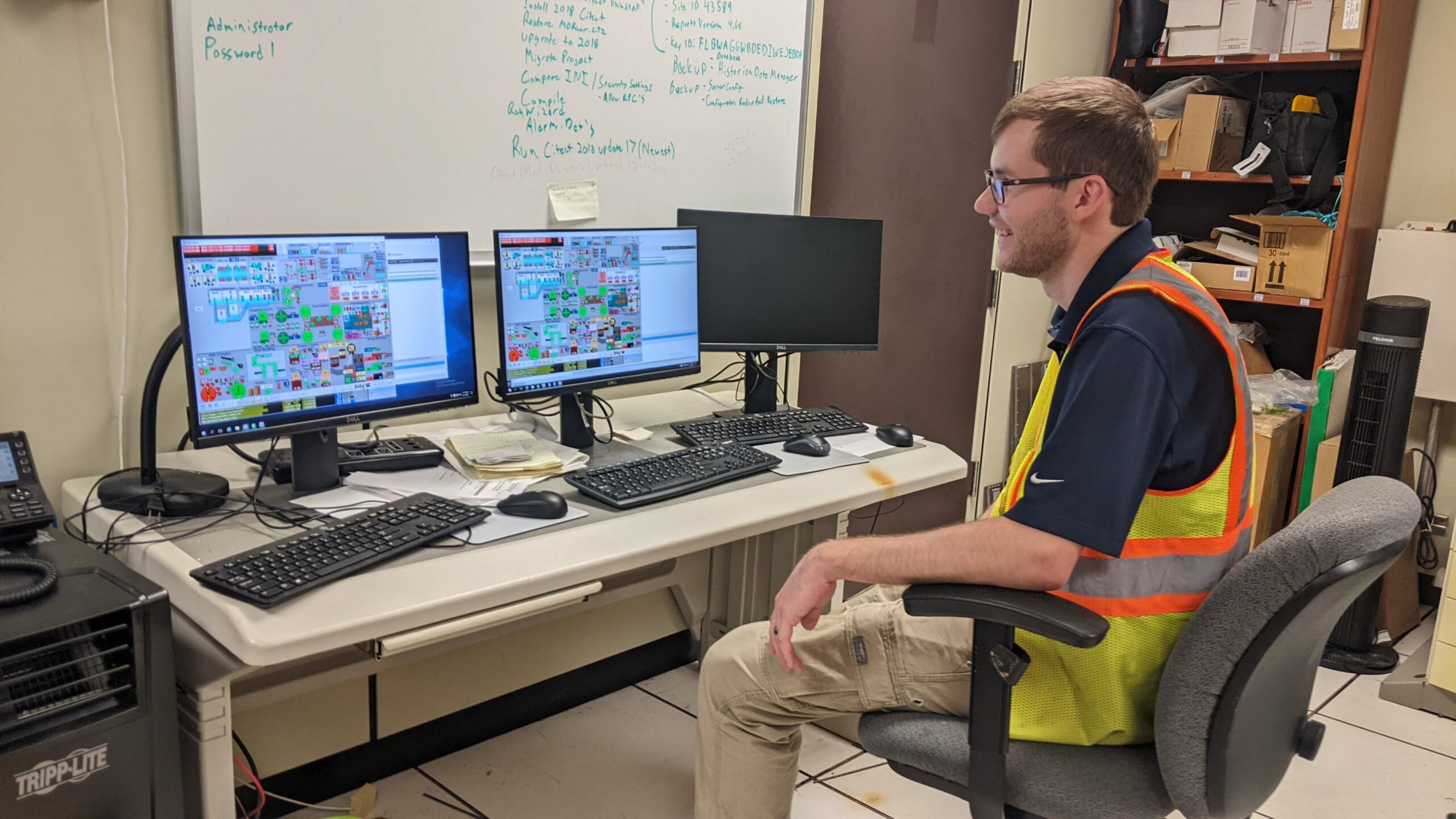
Municipal wastewater treatment plants face mounting pressure to maintain reliable operations while meeting increasingly strict regulatory requirements. This article explains how SCADA integration improves plant reliability, what capabilities to prioritize, and how to evaluate an integration partner.
Why reliability is the first SCADA design requirement
A wastewater plant cannot pause treatment while a server reboots. Every layer of the control system — field devices, PLCs, network and supervisory software — needs a defined failure mode and a path back to normal operation.
Redundancy at the controller, network and server layers
Hot-standby controllers, ring network topologies and redundant SCADA servers remove single points of failure, so a component fault becomes a maintenance ticket rather than a permit violation.
Alarm management operators can act on
Rationalized alarms, clear priorities and remote notification put the right information in front of the right operator, day or night.
Capabilities to prioritize
| Historian & reporting | Discharge monitoring reports on demand. |
| OT cybersecurity | Aligned to AWIA and ISA/IEC 62443. |
| Remote access | Role-based permissions with an audit trail. |
| Standard templates | Reusable objects for pumps, blowers and valves. |
How to evaluate a SCADA integration partner
Look for CSIA certification, references from comparable utilities, in-house UL508A panel capability and a support team close enough to be on site when it matters.
Frequently asked questions
What is SCADA in wastewater treatment?
Supervisory control and data acquisition software monitors and controls plant processes from a central location, collecting data from PLCs and field instruments.
How long does a SCADA upgrade take?
Timelines vary with plant size and phasing, but a staged migration typically runs a few months from design through commissioning.
Can we upgrade without shutting down the plant?
Yes — with hot-cutover planning and redundant hardware, most upgrades proceed with no interruption to treatment.