





How SCADA Integration Improves Wastewater Reliability
Municipal wastewater treatment plants face mounting pressure to maintain reliable operations while meeting increasingly strict regulatory requirements. Huffman Engineering helps utilities navigate this challenge through fault-tolerant SCADA and control systems integration designed specifically for regulated industries. This article explains how SCADA integration improves plant reliability, what capabilities to prioritize, and how to evaluate integration partners for your facility.
Key Takeaways: How SCADA Integration Improves Wastewater Reliability
- SCADA integration connects the data from pumps, sensors, and PLCs into one coordinated system that enables real-time monitoring and faster alarm response.
- Fault-tolerant architectures keep remote lift stations operating autonomously when communication links fail, preventing overflows.
- Huffman Engineering delivers turnkey control systems integration with in-house UL-certified panel fabrication with traceable testing documentation.
- Proper network segmentation and cybersecurity controls protect your treatment infrastructure from increasingly common OT attacks.
- Working with a CSIA-certified integrator reduces project risk and ensures your system meets EPA and state compliance standards.
- Huffman Engineering’s unique workshop model bridges the gap between original design and end goals and eliminates costly change orders
What Is SCADA Integration in Wastewater Treatment?
SCADA stands for Supervisory Control and Data Acquisition. In wastewater applications, SCADA integration connects your treatment plant’s sensors, pumps, blowers, and programmable logic controllers (PLCs) into a unified monitoring and control system.
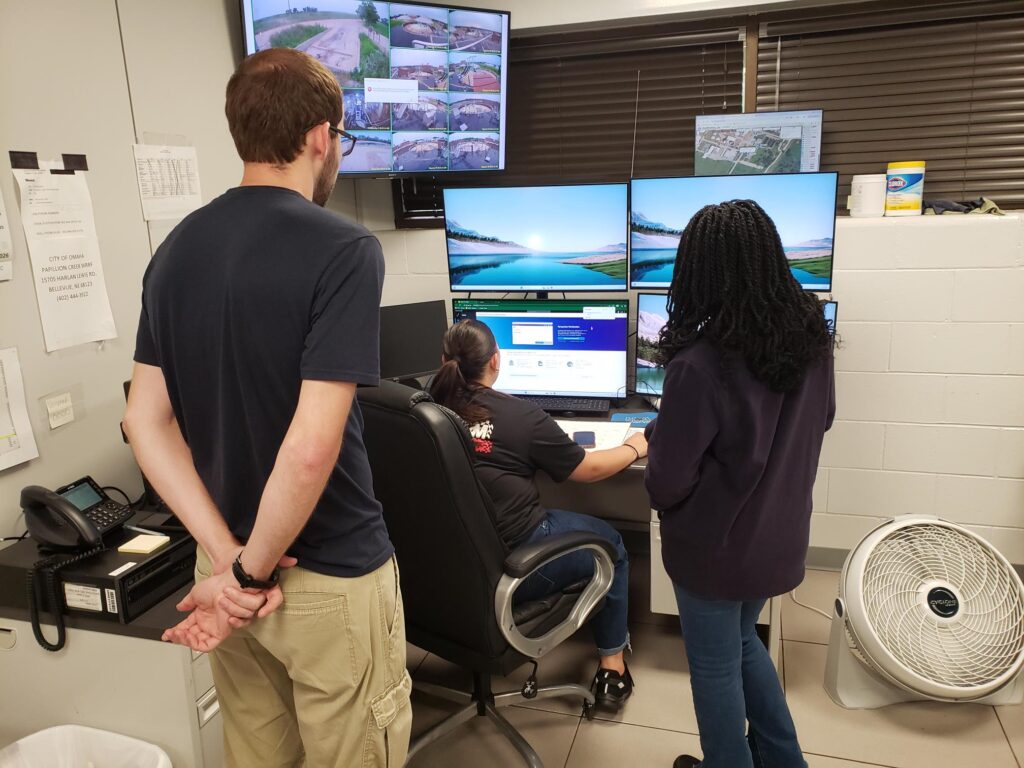
This integration gives operators real-time visibility into every process stage—from influent screening through final disinfection. Instead of checking equipment manually at each location, your team monitors the entire plant from a central control room or even a mobile device.
A well-integrated SCADA system also automates routine decisions. When influent flow increases during a storm event, the system can automatically adjust aeration rates and blower speeds to maintain treatment efficiency without operator intervention.
How Does SCADA Integration Improve Plant Reliability?
Reliability in wastewater treatment means keeping permit limits, avoiding sanitary sewer overflows, and minimizing unplanned downtime. SCADA integration addresses all three through several mechanisms.
Continuous Monitoring Replaces Periodic Inspections
Manual rounds catch problems hours or days after they begin. SCADA systems monitor equipment status continuously and generate prioritized alarms the moment a parameter drifts outside acceptable ranges. This early warning allows your maintenance team to address issues before they cause treatment upsets or equipment failures.
Automated Response During Off-Hours
Many treatment upsets occur during nights and weekends when staffing is limited. A properly configured SCADA system executes pre-programmed responses (pre-programmed through the PLC) automatically, switching to backup pumps, adjusting chemical feed rates, or isolating faulty equipment, while simultaneously alerting on-call personnel.
This remote monitoring, when properly configured, saves countless hours of operational time in troubleshooting unforeseen errors.
What Reliability Improvements Can You Expect from SCADA Integration?
Utilities that invest in proper SCADA integration typically see measurable improvements in several operational areas. Alarm response times decrease because operators receive prioritized notifications instead of hundreds of undifferentiated alerts. Mean time to repair drops because historical trending data helps maintenance staff diagnose root causes faster.
Energy costs often decline as well. Integrated systems can schedule pump operations during off-peak rate periods and optimize blower output based on real-time dissolved oxygen readings rather than fixed timers.
Regulatory compliance also improves. SCADA historians create timestamped records that simplify NPDES reporting and provide the documentation your state agency requires during inspections.
Huffman Engineering also has experience with methane gas capture and redistribution back to the grid which can earn back valuable electrical credits.
Why Is Cybersecurity Critical for Wastewater SCADA Systems?
If you’ve been paying attention at all in recent months, you’ll know that cyberattacks on critical infrastructure have risen substantially. Wastewater facilities especially have become high targets for cyberattacks. A compromised SCADA system could disable treatment processes, trigger chemical releases, or cause sanitary sewer overflows that endanger public health.
A strong integration partner who really understands the implications of aligning cyber protections with your infrastructure should be a top priority as you look to upgrade your system. Your integration partner should implement network segmentation that separates your operational technology (OT) network from your business IT systems. Role-based access controls ensure only authorized personnel can modify setpoints or acknowledge critical alarms. Encrypted communications protect data transmitted between remote sites and the central control room.
Huffman Engineering incorporates industrial cybersecurity risk assessments aligned with IEC/ISA 62443 standards into control system projects, helping utilities identify vulnerabilities and implement appropriate safeguards.
What Should You Look for in a Wastewater Control Systems Integrator?
Selecting the right integration partner is one of the most consequential decisions you will make. The wrong choice leads to cost overruns, systems that underperform, and years of frustration. Here are some of the capabilities that matter most.
Water and Wastewater Industry Experience
SCADA for wastewater treatment differs significantly from manufacturing or oil and gas applications. Your integrator should understand EPA and state regulatory requirements, common treatment processes, and the communication challenges posed by distributed lift station networks.
Huffman Engineering’s cost mitigation strategy lies in their unique workshop model bringing the consulting engineer and the end user to the table to help bridge the automation gap and discuss crucial high-impact issues early in the development stages. This often eliminates costly change orders and brings projects to successful conclusions for all parties involved.
CSIA Certification
Huffman Engineering has been proudly CSIA certified every year since 2005, showcasing our relentless drive for achievement in pursuing business excellence.
The Control System Integrators Association (CSIA) certification demonstrates that an integrator follows documented quality management practices, maintains financial stability, and invests in staff development. This third-party verification reduces your project risk compared to working with uncertified firms.
In-House Panel Fabrication
Quality control suffers when integrators outsource panel building to third parties. Look for a partner with UL-certified panel shops that can design and fabricate control cabinets specifically for the corrosive, humid environments common in wastewater facilities.
Huffman Engineering maintains documented procedures and controls for panel fabrication, inspection, testing, drawing/redline control, document management, and project turnover. In-process and final quality checks are performed during fabrication, and panels undergo factory testing and verification prior to release.
We have also implemented a more formal Shop QA/QC tracking process that measures items such as redlines, rework, test failures, fabrication hours versus bid, schedule performance, and overall shop quality/performance scores. These metrics are reviewed regularly with the production team to identify trends, address recurring issues, and support continuous improvement.
Full-Lifecycle Support
The best integrators provide turnkey capability from initial design through commissioning and ongoing support. This single point of accountability eliminates finger-pointing between contractors and ensures the team that designed your system is the same team that starts it up and supports it over time.
Huffman Engineering is proud to have served many of our customers over decades, allowing us to fully understand the inner design and workings of their systems and allowing us to have strategic conversations with them as they continue to grow within their communities.
How Does Huffman Engineering Approach Wastewater Control Integration?
Huffman Engineering brings four decades of experience delivering control systems integration projects for regulated industries including water and wastewater utilities. As a CSIA-certified integrator for five consecutive certification periods, the firm maintains documented quality management practices and invests continuously in staff training.
The company operates an in-house UL-508A and 698A certified panel shop, enabling complete control over fabrication quality. Projects include custom electrical control panels designed for the specific environmental conditions at your facility, with appropriate NEMA ratings and corrosion protection for installations near headworks or in lift station wet wells.
Engineering staff includes degreed electrical, mechanical, and chemical engineers along with licensed Professional Engineers. This technical depth supports complex treatment applications including biological nutrient removal, membrane filtration, and UV disinfection systems.
What Documentation Should Your SCADA Integration Project Include?
Proper documentation protects your investment and enables future maintenance by your own staff or alternate contractors. Your integrator should deliver fully annotated PLC source code that your team can access without proprietary passwords or encryption.
HMI application files, network diagrams, and I/O lists should be included in an as-built documentation package. For regulated facilities, you may also need IQ/OQ/PQ validation documentation that demonstrates the control system performs as specified.
Huffman Engineering provides detailed commissioning, qualification, and validation documentation including IQ/OQ/PQ packages that satisfy FDA, USDA, EPA, and state regulatory requirements.
How Can You Minimize Disruption During SCADA System Upgrades?
Many utilities operate aging control systems that need modernization but cannot afford extended treatment outages. Legacy system migration requires careful planning and specialized expertise.
An experienced integrator will develop a phased cutover plan that migrates one process area at a time while maintaining continuous treatment operations. Edge protocol converters can translate communications from older PLCs to modern networks, allowing gradual hardware replacement rather than all-at-once upgrades.
Factory acceptance testing (FAT) stages the entire system in the integrator’s shop to verify logic before shipping. This approach identifies and resolves issues before equipment arrives at your site, minimizing startup time and reducing on-site changes.
FAQs About How SCADA Integration Improves Wastewater Reliability
What is the difference between SCADA and a PLC?
A PLC (programmable logic controller) executes local control logic at a specific process area—managing pump starts, valve positions, and equipment interlocks. SCADA is the supervisory layer that connects multiple PLCs, provides operator visualization, stores historical data, and enables remote monitoring across your entire facility.
How long does a wastewater SCADA integration project typically take?
Project duration depends on scope and complexity. A small lift station monitoring project might complete in a few months. A full treatment plant SCADA upgrade with new panels, PLCs, and networking typically requires 12-18 months from design through commissioning. Huffman Engineering uses simulation and FAT testing to compress on-site startup time and reduce overall project schedules.
Can SCADA integration help with regulatory compliance?
Yes. SCADA historians create timestamped records of treatment parameters, alarm events, and operator actions. This data simplifies permit reporting, supports compliance demonstrations during inspections, and provides the documentation trail regulators expect from modern treatment facilities.
How does Huffman Engineering support systems after commissioning?
Huffman Engineering offers rapid response troubleshooting, disaster recovery support, and ongoing maintenance services for control systems. The firm maintains a Midwest presence that enables fast on-site response when remote diagnostics cannot resolve an issue.